Performance of Authenticity
If you make art and no one was there to see you do it, did you even make it?
It feels like every time I see something cool online, I need to zoom in as close as I can to make sure it isn't AI. I want to know it was made, not generated. I have even gotten comments on my own photographs accusing me of generating them with AI. While I hope people look at my photos longer than a few seconds, the reality is that social media consumption is FAST. How do you build trust that something is real in the few seconds it is seen online.
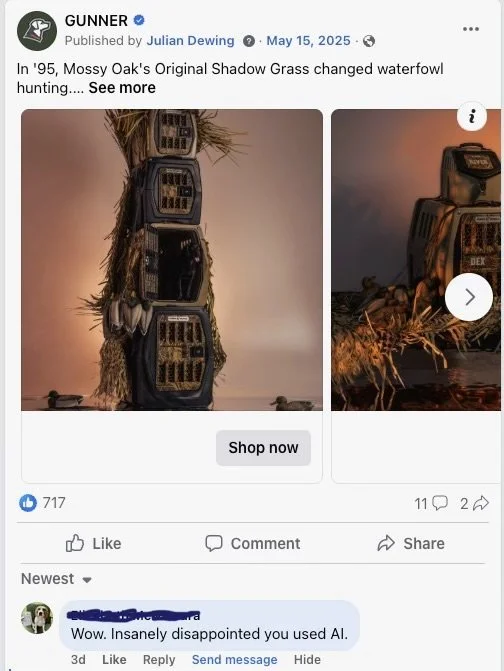
You need to prove authenticity to achieve impact.
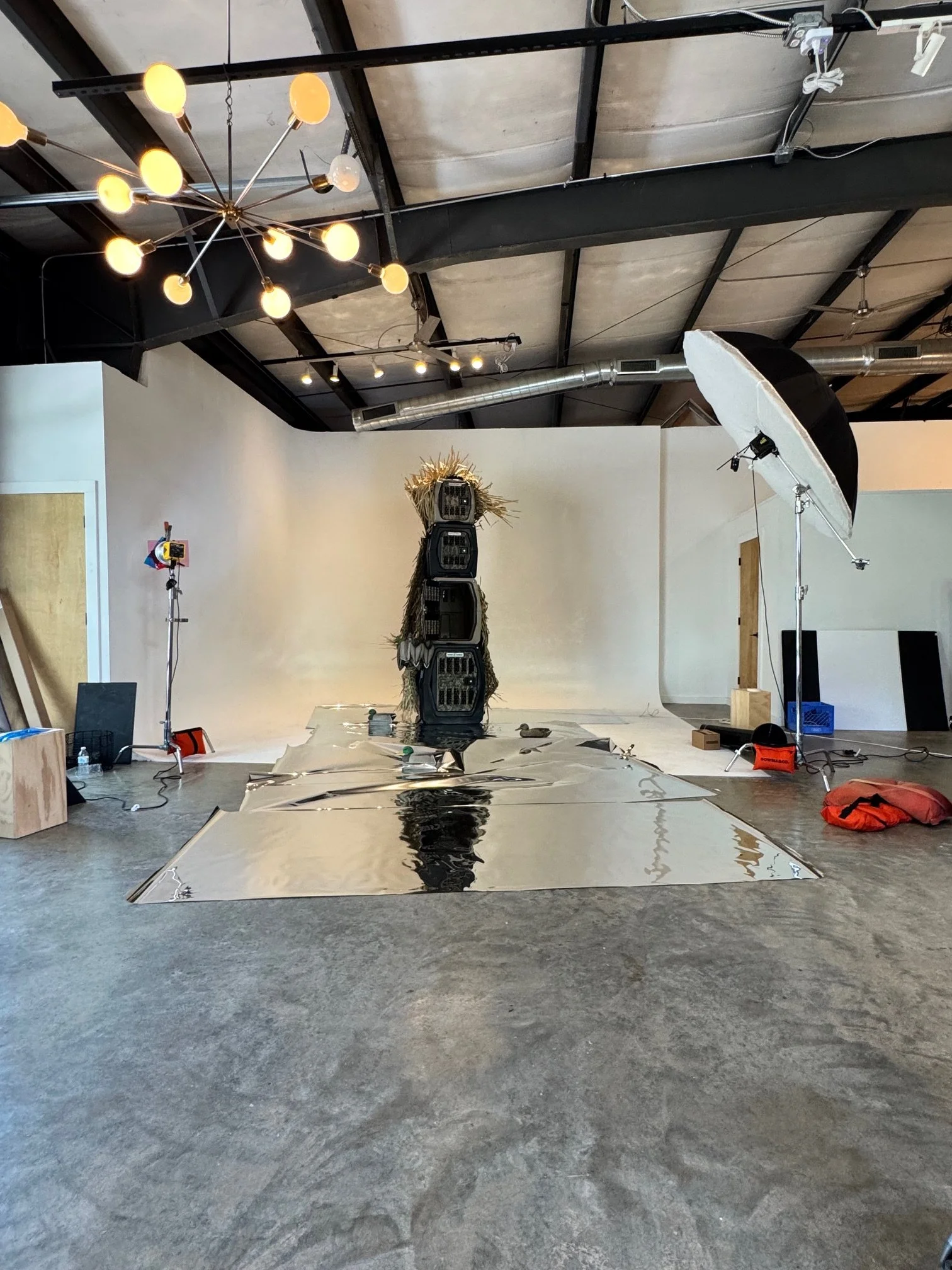
The making of the image; mylar water and real decoys!
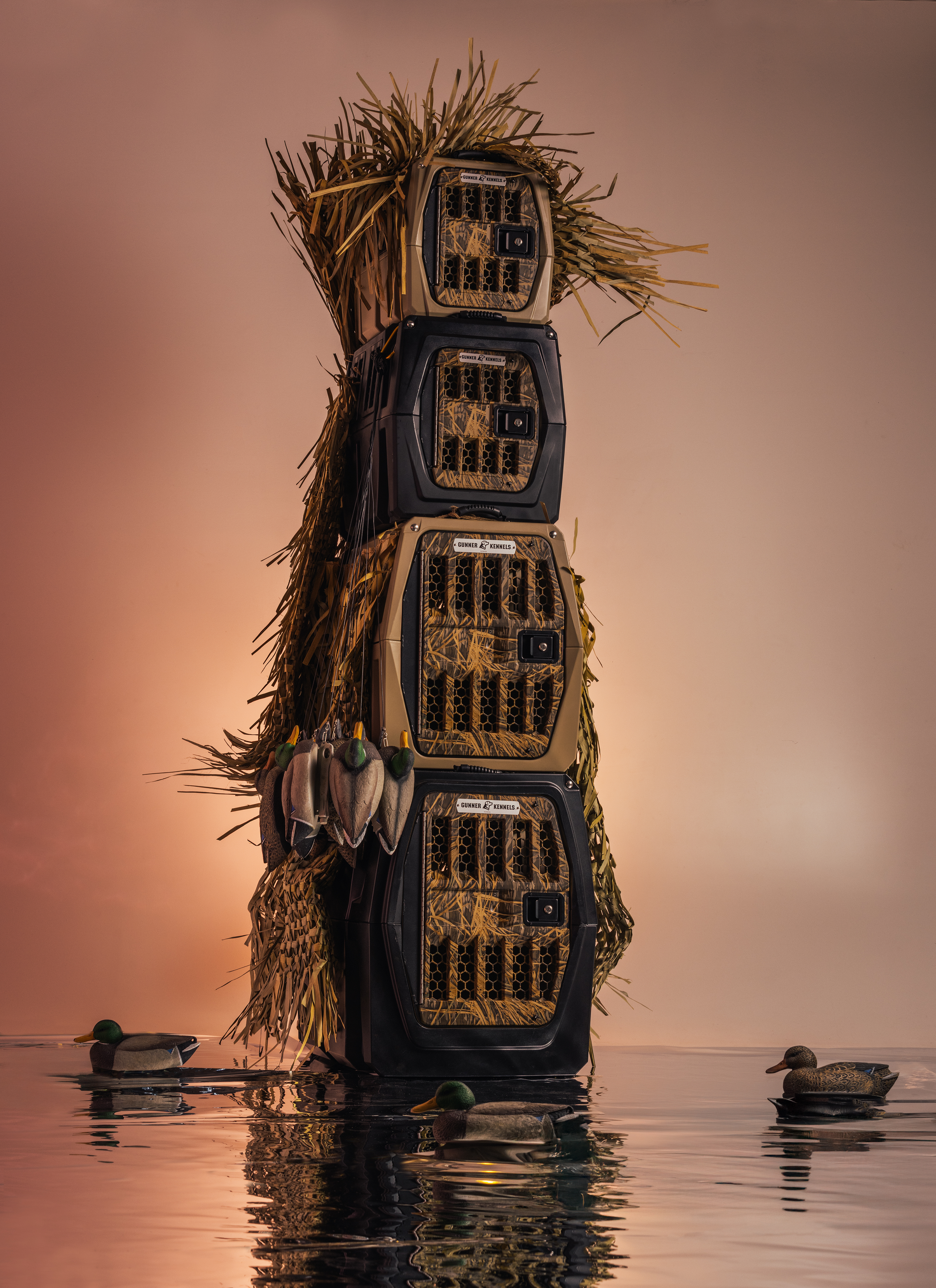
The final image.
Enter the era of the curated rough draft. It is no longer enough to post the end result of hours upon hours of work; you need to be seen during those hours spent creating. What happens behind the scenes is as important as the end result. There are a few brands that have stood out to me as executing this well. Ffern Co., a perfume brand based in England, creates incredibly immersive brand films and photoshoots that turn the process into art. Posting behind the scenes as paid ads and often shooting on 16mm film creates a sense of place and realness in their media.
This focus on behind the scenes opens up opportunities to create more content on set but brings with it the need for a crew member to act as the dedicated documentarian.
As a solo artist, it can feel like a disjointed effort to film as you work. It is hard to get into that flow state while making sure you are getting good clips for the reel at the same time. But as we confront the ever-growing torrent of AI-slop, the process becomes the art, and documenting it becomes a full-time job.
For smaller projects, or graphic design, this problem can be partially solved with physical media, such as scrapbook pages, notes and drawings, rough drafts, prints, and film; all these media are marked by physicality and inherit imperfections. The imperfections shine as beacons of the work's humanity. In an age of frictionless perfection, more people, and especially young people, crave the warmth of older media like vinyl records or film photography to feel that human hands were essential in the process.
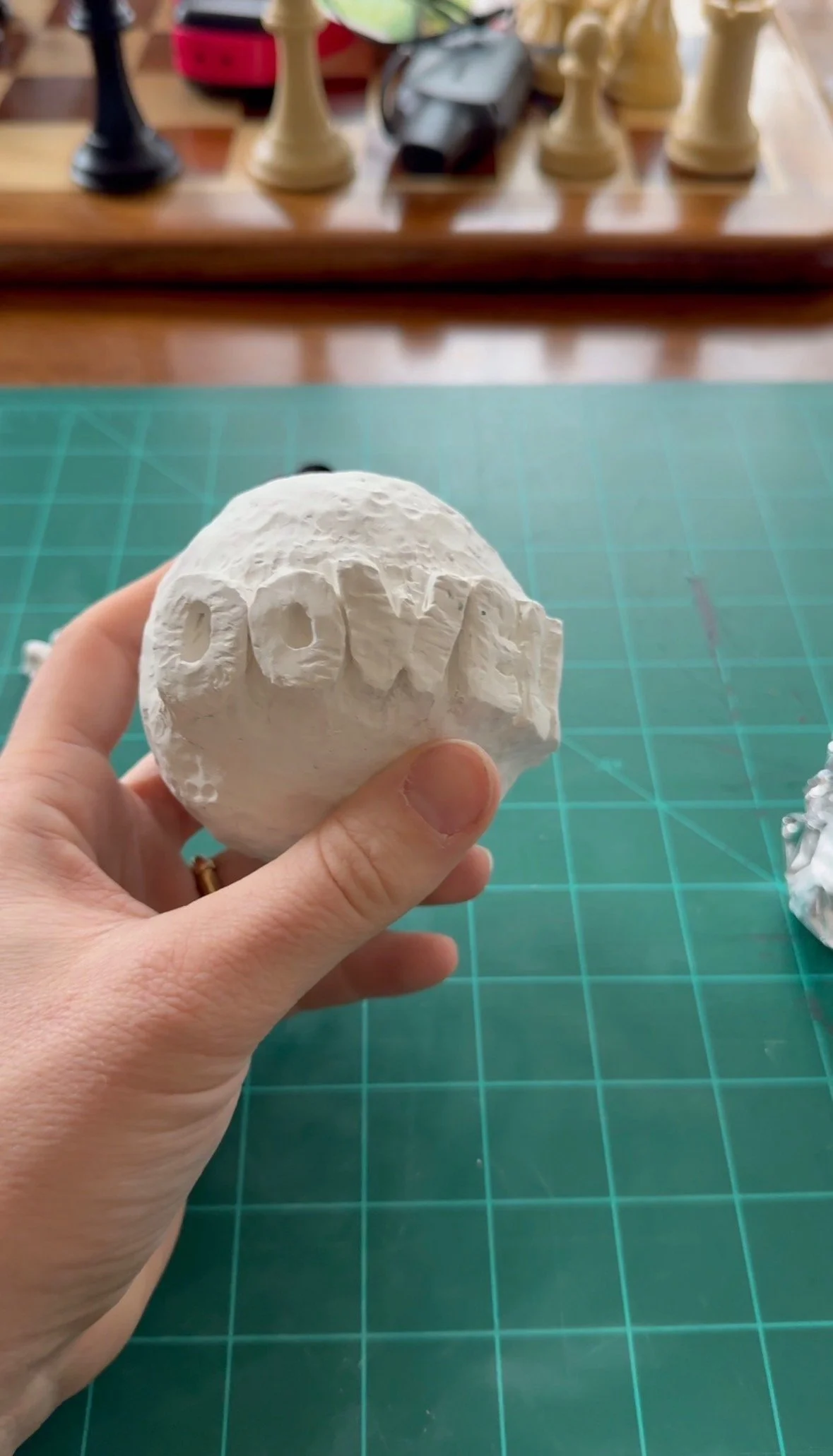
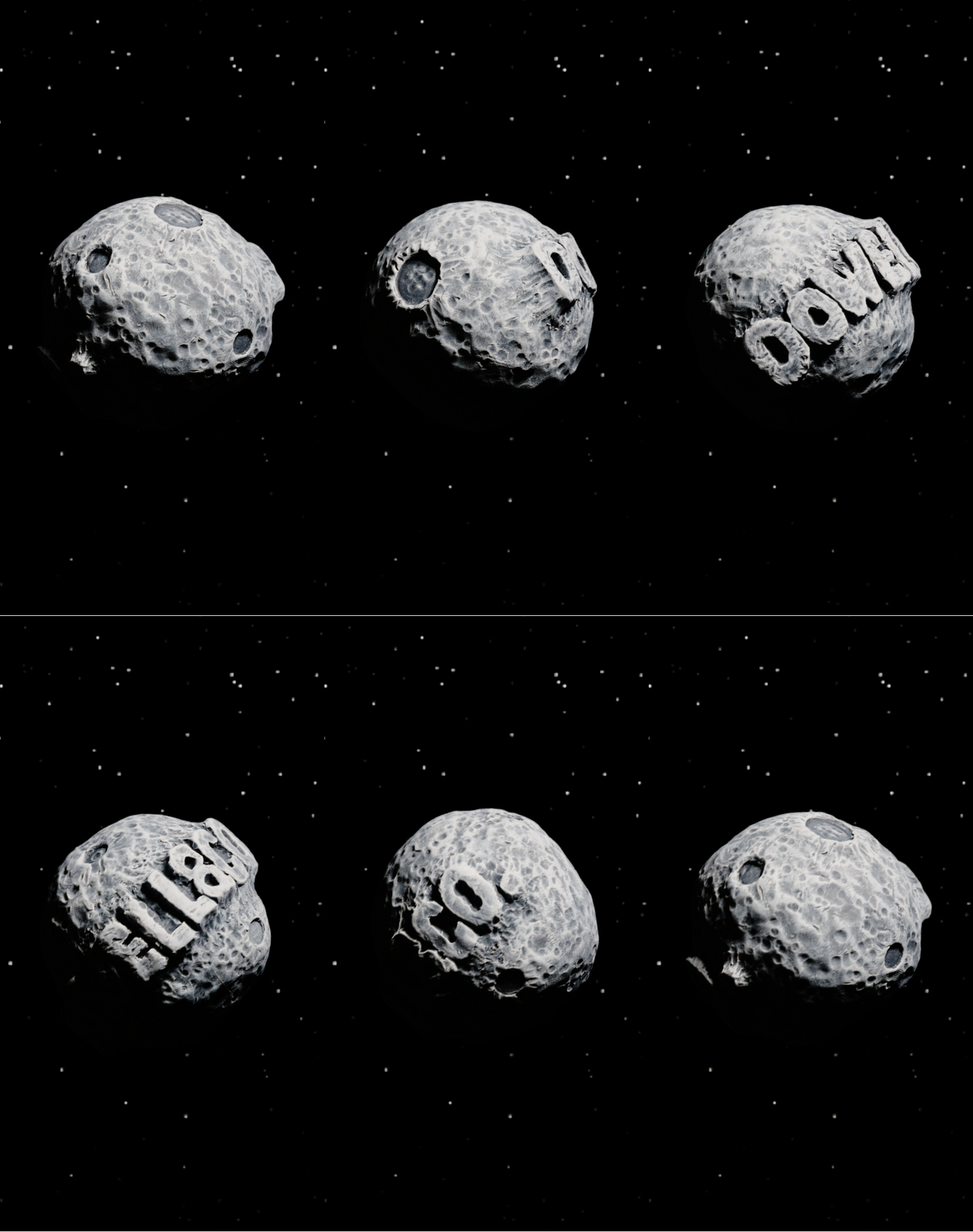
Building “Dowell & Co.” moon out of clay.
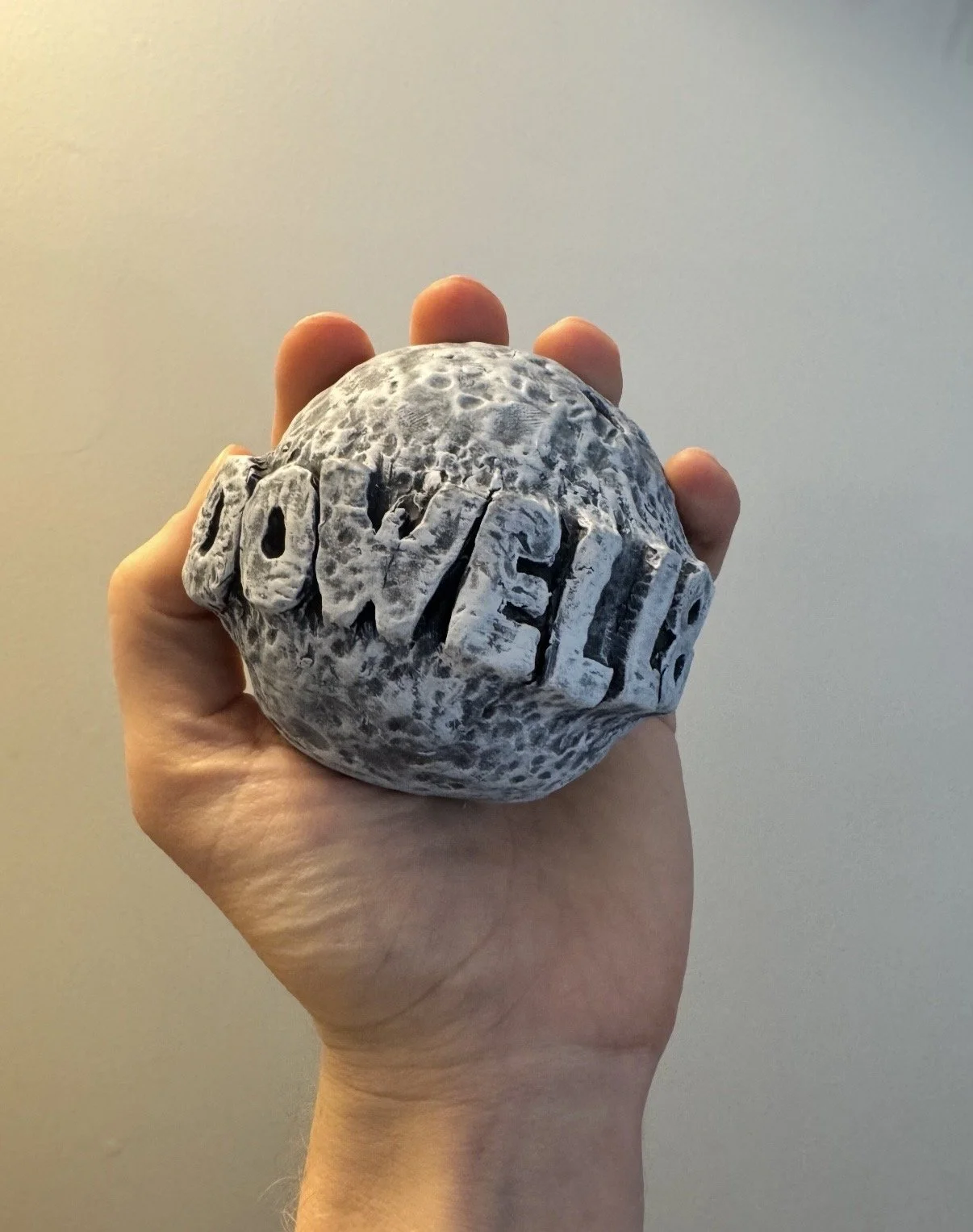
Post first coat of paint.
For me this has meant looking at my own process of creating and exploring ways to document myself in that work. I have found that adding steps to the end of my workflow to bring the work off the screen and reworking with my hands feels right to me. I have also tried to make an effort to film more of the process to share on social media, or hire assistants who can also help document. The tactics will need to keep evolving as the platforms change, but it has become clear that the final draft isn't enough anymore.